
New incubators and open radiant warmers, respiratory support devices, and much more: thanks to the generous support of donors, the hospital acquired a total of 17 new medical devices last year, with a combined value of €561,300.
“The Children’s Foundation has, over many years, been an indispensable partner to the Children’s Clinic, both in making the hospital environment more child-friendly and in ensuring access to the latest treatment options and technological advancements. Together with our young patients, we are deeply grateful for this support,” said Prof. Tuuli Metsvaht, Head of the Children’s Clinic at Tartu University Hospital.
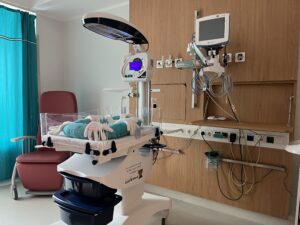
A total of 1,880 children were born at the university hospital last year. Of these, 516 required hospital care for various reasons, including 157 who were born prematurely. As a significant enhancement in neonatal care, the neonatology department received five modern incubators. Three of these, Giraffe incubators, provide a safe, enclosed care environment for premature and critically ill newborns, maintaining optimal temperature and humidity levels; they can also be connected to an oxygen system. An important advantage of these incubators is their ability to be quickly adjusted if child’s condition suddenly deteriorates. Two additional open incubators also ensure the correct temperature for the infant, using a skin sensor that automatically regulates heat. All incubators are height-adjustable, making it easier for doctors, nurses, and families to care for the child. The acquisition of the Giraffe incubators was supported by the Estonian American Fund and the Church of Jesus Christ of Latter-day Saints, while the open incubators were donated by Baltic Agro.
The neonatology department also received a twin warming bed, allowing prematurely born siblings to recover side by side. This larger-than-usual bed can also be used for triplets or for infants requiring more space for care. The twin bed was donated with the support of Selver, which also helped provide two specialized wheelchairs for the general pediatrics and neurology departments.
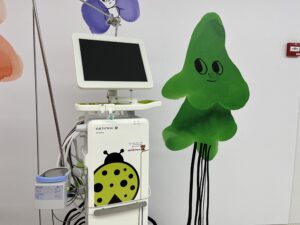
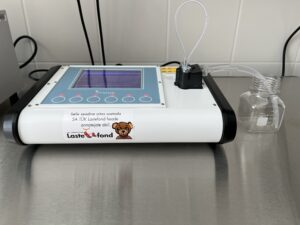
To ensure that even the smallest patients can receive optimal respiratory support already on their way to the hospital, the department of anesthesiology and intensive care acquired a ventilator equipped with neonatal software, made possible by the Church of Jesus Christ of Latter-day Saints. Additionally, a newly acquired breast milk analyzer enables individualized nutrition for premature infants by determining whether a mother’s milk requires fortification to support stable growth. The analyzer will play a crucial role in the donor breast milk bank planned at the hospital in the near future.
To make hospital stays more pleasant for young patients and help ease their worries, a variety of play installations have also been added across different departments and outdoor areas. These activities cater to both younger and older children, offering opportunities to test dexterity, speed, and creativity.
Sincere gratitude to everyone who has contributed to improving treatment for children!